Master of Science in AI & New Technologies
Fact sheet
Graduation
Master, Master of Science (M.Sc.)
Taught language
Deutsch, Englisch
Specialization
Technologie
Program Emphasis
Artificial Intelligence, Technology
Course options
Berufsbegleitendes Studium, full-online
Locations
Frankfurt am Main, Online
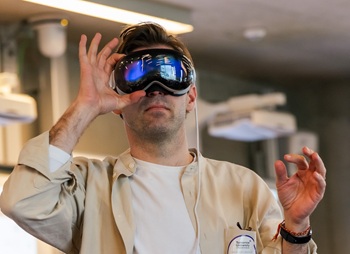 A curriculum built around AI, emerging technologies, and conscious transformation
As technology accelerates, the real advantage isn’t access to AI - it’s the ability to apply it consciously and effectively. This Impact MSc helps you understand how AI and emerging technologies actually work, where they add value, and how to turn ideas into responsible, real-world applications that last.
- Assess and Apply AI in Practice
Build a grounded understanding of what AI can and cannot do. Learn to evaluate trends critically, test assumptions, and identify use cases worth building, not just pitching. - Build with Emerging Technologies
Explore IoT, robotics, automation, and cybersecurity through practical lenses. Understand how future tech stacks come together and how to apply them in real operational contexts. - Design for Ethics, Trust, and Impact
Work hands-on with the ethical, legal, and societal implications of AI. Learn how to make decisions that stand up under scrutiny and support trust, transparency, and human outcomes. - Lead Transformation through Execution
You’re moving into AI, digital transformation, or tech strategy and want to build real capability, not just credentials, while staying grounded in purpose and responsibility.
Requirements / Application
- Applicants for the 90 ECTS Master of Science (MSc) in Sustainability, Innovation & Technology must have an undergraduate degree with at least 210 ECTS or equivalent credit points, completed over a standard study period of at least six semesters
- Applicants for the 120 ECTS MSc in Sustainability, Innovation & Technology must have an undergraduate degree with at least 180 ECTS or equivalent credit points, completed over a standard study period of at least six semesters
- The undergraduate degree must be in a relevant subject area, such as:
- Business, economics, or sustainability-related fields (e.g., business administration, sustainable development, entrepreneurship, or management)
- Related fields such as environmental sciences, sustainability sociology, policy, technology, computer science, AI, data science, or humanities with a sustainability focus
- Applicants must demonstrate sufficient English language proficiency at a minimum B2 level according to the European Framework of Reference for Languages
- Motivation must be shown through the application form and will be further assessed during the admission process
- An admission interview is mandatory to evaluate eligibility and alignment with the program
A previous undergraduate university degree is required to apply. Although applicants without a degree but with vocational training and relevant professional experience may sometimes be eligible for special entrance exams, this does not apply to this program. Therefore, we cannot accept applications without a completed university degree.
Policy on ECTS Credits and Graduation Requirements
- To graduate with the MSc, learners must achieve a total of 300 ECTS by the end of the program.
- Learners with a 180 ECTS bachelor’s degree enrolling in the 120 ECTS MSc will meet the requirement naturally.
- Learners with a 210 ECTS bachelor’s degree enrolling in the 90 ECTS MSc will also meet the requirement.
- In rare cases, learners with a 180 ECTS bachelor’s degree seeking the 90 ECTS MSc may have 30 ECTS credited from professional experience to reach the required 300 ECTS. This is strongly discouraged in favor of the 120 ECTS program.
- Professional experience must be relevant to MSc subjects, involve at least two years of full-time work, and may include sustainability, innovation, or technology-related roles.
Important Dates
23 March 2026
08 June 2026
September 14, 2026